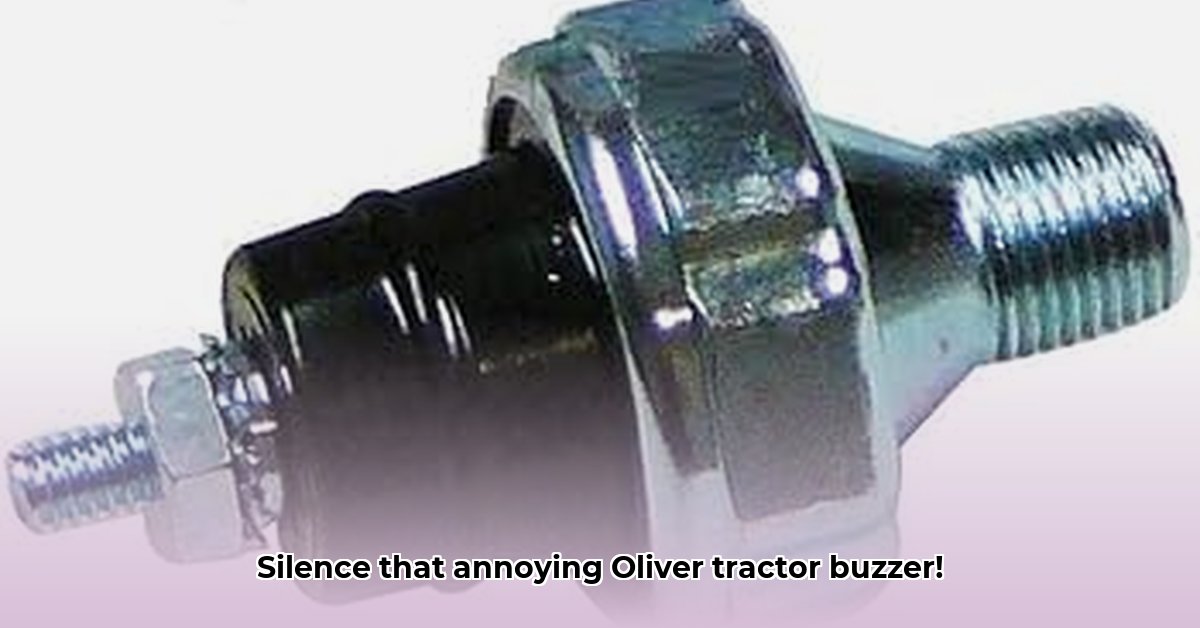
That persistent buzzing from your Oliver tractor's oil pressure warning system? It's not just annoying; it signals a potential engine problem. This guide provides a step-by-step approach to diagnosing and fixing the issue, ensuring your tractor's smooth operation. For more tractor troubleshooting tips, see this helpful resource: John Deere troubleshooting.
Understanding Your Tractor's Oil Pressure Warning System
Your Oliver tractor's oil buzzer serves as a critical early warning system. Unlike tractors with oil pressure gauges, this buzzer is your primary indicator of low oil pressure. Ignoring it can lead to significant and costly engine damage. The system is relatively simple: a low oil pressure reading triggers the buzzer. To troubleshoot, check three key components: the buzzer itself, the oil pressure sending unit (the sensor detecting oil pressure), and the wiring connecting them.
Step-by-Step Troubleshooting: Identifying the Problem
This section details the troubleshooting process. Remember, safety first! Always disconnect the battery's negative terminal before working with electrical components.
1. Visual Inspection: The First Step
Before using any tools, carefully examine the oil pressure sending unit and its wiring. Look for any visible damage, such as frayed, broken, or corroded wires, loose connections, or any signs of physical damage to the sender unit itself. Addressing these issues could solve the problem quickly. A simple visual inspection can save significant time and effort on more complex tests.
2. Testing the Buzzer: Is it Functional?
Use a multimeter (available at most hardware stores) to test the buzzer's functionality. First, disconnect the wires from the buzzer. Set your multimeter to check for continuity—this determines if electricity can flow through the buzzer. Touch the multimeter probes to the buzzer's terminals. A continuous reading indicates the buzzer is working correctly. A lack of a continuous reading means you need to replace the buzzer.
3. Checking the Oil Pressure Sending Unit: Sensor Functionality
With the engine off, use your multimeter to test the oil pressure sending unit's connection. You should see a continuous circuit (electricity flowing). Start the tractor's engine. If the circuit breaks when the engine runs, the sending unit is likely functional. However, if the circuit remains closed (electricity continues to flow), the sending unit is likely faulty and needs replacing. This test determines whether the sender is properly sensing oil pressure.
4. Ground Connection: Essential for Proper Function
A reliable ground connection is vital for the oil buzzer system. Thoroughly inspect the ground wire connecting to the sending unit. Look for corrosion or loose connections. Clean corrosion with a wire brush and ensure a tight connection. A faulty ground can cause a wide variety of electrical problems. A secure ground is crucial for reliable system function.
5. Replacing Faulty Components: The Next Steps
If your tests indicate a faulty buzzer or sending unit, replacement is usually straightforward. Search online (using your tractor's model and year) or visit a local farm supply store to find the correct replacement parts. Common replacement part numbers may include Delco Remy 1116882, but always verify compatibility. Replacement typically involves removing the old component and installing the new one.
6. Low Oil Level: The Simplest Explanation
Before extensive troubleshooting, check your oil level using the dipstick. Low oil is a simple but often overlooked cause of the oil pressure buzzer. Adding oil may resolve the issue immediately.
Troubleshooting at a Glance: Summary Table
This table summarizes the troubleshooting steps:
| Component | Potential Problem | Testing Method | Solution |
|---|---|---|---|
| Oil Buzzer | Faulty buzzer | Multimeter continuity test | Replace the buzzer |
| Oil Pressure Sending Unit | Faulty sending unit | Multimeter continuity test (engine on/off) | Replace the sending unit |
| Wiring & Connections (including ground) | Damaged, loose, or corroded | Visual inspection, multimeter test | Repair or replace wiring, clean connections |
| Oil Level | Low oil level | Dipstick check | Add oil |
Preventative Maintenance: Avoiding Future Issues
Regular maintenance is crucial to prevent future oil pressure buzzer problems. Include inspection of the oil pressure system in your routine tractor maintenance. Keeping replacement parts (buzzer and sending unit) on hand can also significantly reduce downtime if a problem arises. Proactive maintenance saves time and money in the long run.
Addressing a faulty oil pressure buzzer promptly protects your tractor's engine and prevents costly repairs. Now, you're better equipped to handle those nagging buzzer issues and keep your Oliver tractor running smoothly!